By Zubeida Jaffer
On Friday night (28 August,2026), the University of the Western Cape (UWC) conferred a posthumous honorary doctorate on Charlotte Mannya Maxeke in the presence of her family and an array of outstanding doctoral recipients. The recognition came 125 years after she received her degree at Wilberforce University in Ohio in 1901 becoming the first Black female South African to hold a degree.
Today close to 2,5 million women in South Africa are university graduates, an achievement of the democratic dispensation that reversed the tight restrictions that limited university entrance for more than a century.
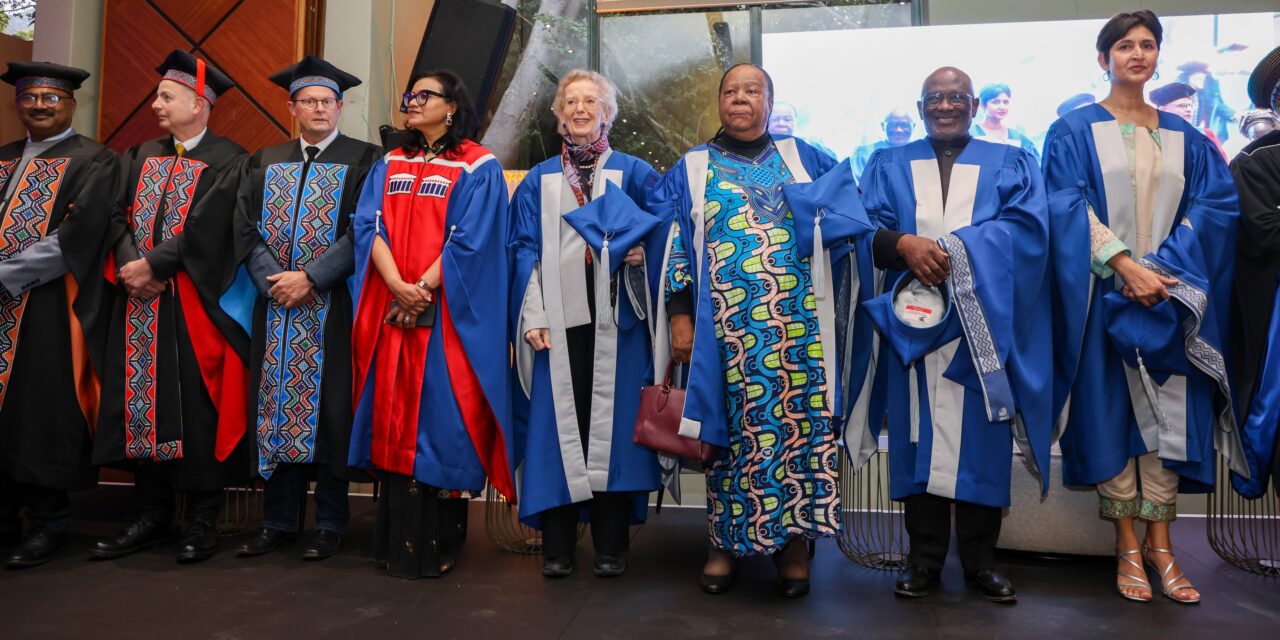
She was honoured alongside five other women and one man in a joyous occasion at Kirstenbosch Gardens that could easily be described as the pinnacle of achievement for a university that was designed to exclude all South Africans except those apartheid classified Coloured.
When the academic procession moved through the hall onto the stage standing quietly in unison as the national anthem was sung, the moment represented a transformative experience that is likely not to be easily forgotten. The past was linked to the present by a university designed for separation and fracture. Instead in that moment it represented the collective dream of an inclusive South Africa that some currently actively choose to dismantle.
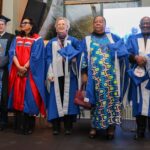
Standing with the rector and vice-chancellor of UWC, Professor Robert Balfour, were academic staff and those about to take up their honours: lead advocate with the Madlanga Commission, Adila Hassim, former Foreign Affairs Minister, Naledi Pandor, former president of Ireland, Mary Robinson, daughter of the late Gugulethu activist, Mandisa Monakali, Ella Monakali, the family representative of the late education pioneer Charlotte Mannya Maxeke, Olga Mannya-Sema, former Wits Vice-Chancellor, Loyiso Nongxa. Absent from the line-up was UN Rapporteur Francesca Albanese.
The university brought together an array of great minds seldom combined under one roof moving it firmly away from its separatist past. Professor Jakes Gerwel was one of the key individuals who drove this change in direction. In 1987 when he took up the leadership mantel, he set in motion an approach that is now, nearly 40 years later, in full bloom.
Then the campus was a haphazard set of buildings that looked like a high-school establishment. Through sustained imaginative and consistent effort by many people, this university has been transformed into a beautiful space of learning for all students and staff.
In his address, Professor Balfour said the honorees came from different generations, disciplines and walks of life. “However, their work reflects a common conviction that knowledge, leadership and courage can be placed at the service of human dignity, equality and social transformation.”
He outlined details of the seven honorees as follows: Albanese has brought international law and human rights advocacy to some of the world’s most contested questions. Hassim has used the law as an instrument for advancing constitutional rights and social justice. Maxeke’s life embodied the liberating power of education and the struggle against racial and gender exclusion. Monakali carried that struggle into communities working to protect women and children from violence. Nongxa’s career in mathematics and higher education, reflects intellectual excellence and the breaking of racial barriers in academia. Pandor has connected education, scholarship and public service with the development of a democratic South Africa. Robinson’s career has placed human rights, equality and human dignity at the centre of public leadership.
(For greater detail of each recipient, visit www.uwc.ac.za )
That context places Maxeke’s honour within a broader tradition of recognising women who challenged injustice and expanded the space for all South Africans in public life. The ceremony was therefore not only about one remarkable pioneer, but also about a lineage of leadership, activism and sacrifice that continues to inspire South Africans today.
Maxeke was not only a pioneering graduate, but also a teacher, church leader, activist and advocate for women’s rights. Her legacy has long been associated with education, dignity and resistance to exclusion. Her family representative, Olga Mannya-Sema, said Maxeke was her father’s aunt. “I grew up listening to her story,” she said. “As a child I thought it was a fairy tale. I never expected to be at this celebration where everyone wanted to meet me. It is a great day for us,” she said.
Marking the 125th year of her graduation anniversary, the accolades continue piling up.
The UWC honour comes as the South African Reserve Bank marked Maxeke’s legacy through commemorative coins featuring her image, issued alongside coins recognising the 1956 Women’s March. The coins connect Maxeke’s pioneering graduation to a wider national story of women’s resistance, leadership and sacrifice, reinforcing her place in South Africa’s public memory.
The Reserve Bank’s tribute adds another layer to the commemoration by linking Maxeke not only to education and activism, but also to the broader struggle for freedom and equality. Together with UWC’s honour, the coin release shows how institutions are increasingly working to preserve the legacies of women whose contributions shaped the country.
Scholarly work has also helped deepen public understanding of Maxeke’s significance. Research by Dr Thozama April of UWC’s Centre for Humanities Research has examined Maxeke’s life and influence in greater depth, while Zubeida Jaffer’s biography, Beauty of the Heart, The life and times of Charlotte Mannya Maxeke and her imaginative book for high-school learners, Becoming Charlotte have helped bring her story to wider audiences. Together, such work has ensured that Maxeke is remembered not only as a historic name, but as a thinker, organiser and nation-builder. Her family took up the challenge soon after these efforts and set up the Charlotte Mannya Maxeke Institute(CMMI) led by her grand-nephew Thulasizwe Makhanya. Deepening these initiatives further, UWC has linked the honour to its Charlotte Maxeke-Mary Robinson Research Chair creating a firm bond between South Africa and Ireland.
By honouring Charlotte Maxeke and allowing her family representatives to receive the degree, UWC created a ceremony that bridged past and present. The night was a tribute to a trailblazer whose legacy continuously rises in the public consciousness in defiance of her apartheid erasure.
Zubeida Jaffer is a journalist, author and activist. Two of her four books tells the story of Charlotte Mannya Maxeke. (www.zubeidajaffer.co.za/ www.number10publishers.co.za)
Photo credit: Shelly Christians/UWC
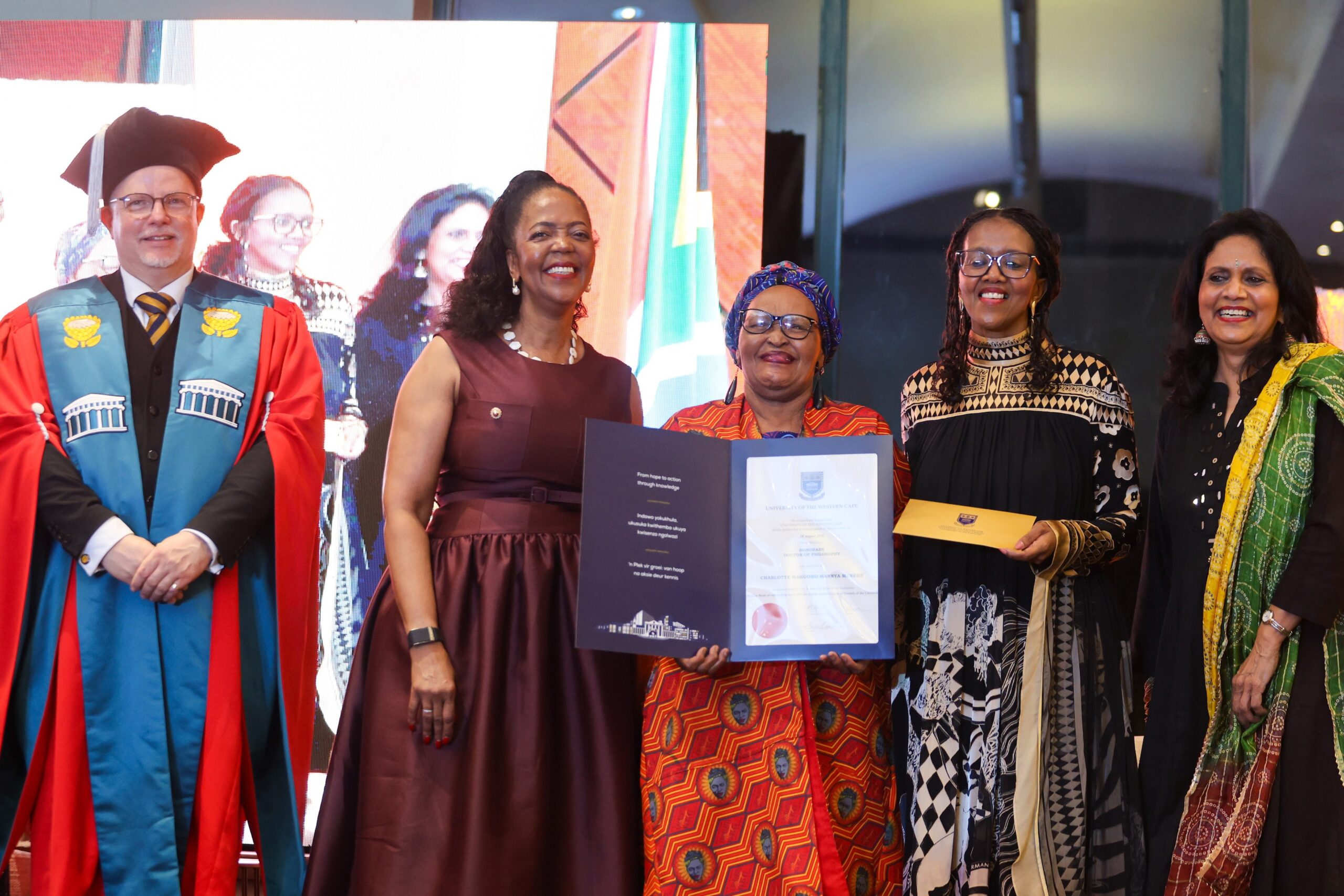
Olga Mannya-Sema accepts the degree with family friends Dr Judy Dlamini and Nolitha Fakude. On either end are UWC’s rector, Prof Balfour and registrar Dr Nita Lawton-Misra.
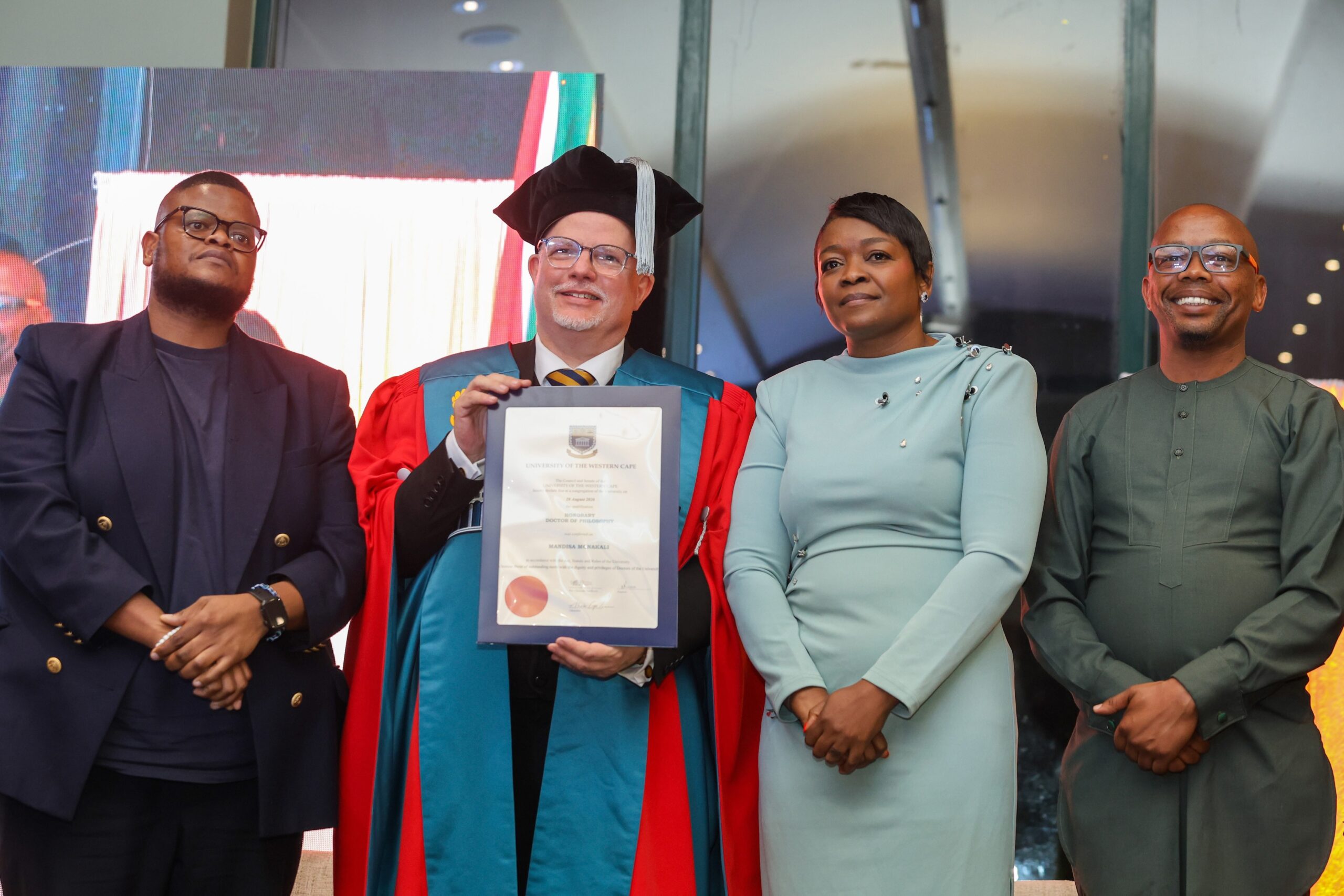
Ella Monakali with her two brothers accept the posthumous award for their mother Gugulethu women and children’s rights activist Mandisa Monakali.
Siyabulela Monakali and Ludwe Nkomo joined the irrepressible Ella who now continues her mother’s work through the organisation Ilitha Labantu. (https://www.ilithalabantu.org.za/)