By PiE Features Desk
Navi Pillay’s Nobel win places South Africa in rare company, reaches back to apartheid-era courtrooms in Durban, and lands, with some irony, in the middle of Pretoria’s feud with Washington.
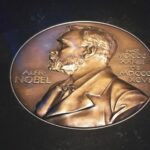
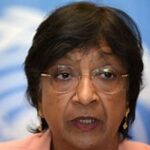
She heard the news in a courthouse, which is fitting. On Friday morning, 9 October, Navanethem “Navi” Pillay was at the Nuremberg Forum in Germany when the Norwegian Nobel Committee announced that she had won the 2026 Nobel Peace Prize “for her efforts to promote peace and international law.” The 85-year-old jurist, born the daughter of a bus driver in Durban, joked to her applauding colleagues that if they kept clapping she might share the prize with Donald Trump.
Pillay is the fifth South African to win the award, after Albert Luthuli, Desmond Tutu, Nelson Mandela and F.W. de Klerk. (Strictly speaking it is the fourth occasion, because Mandela and De Klerk shared the 1993 prize.) It is a remarkable run for one country, and a reminder of how much of the world’s modern thinking about justice was forged in the South African struggle.
How rare is five?
The honest answer is that South Africa is not the country with the most Peace laureates. That distinction belongs to the United States, which leads every tally, followed by the United Kingdom and France. The exact numbers vary from list to list, depending on whether organisations are counted and how a laureate’s nationality is assigned, with American totals appearing anywhere between the low twenties and the high twenties.
What makes South Africa’s record unusual is its shape rather than its size. Africa accounts for only about 9 percent of all laureates, according to Al Jazeera’s count, and on the lists consulted for this article no other African country has more than two: Egypt (Anwar Sadat and Mohamed ElBaradei) and Liberia (Ellen Johnson Sirleaf and Leymah Gbowee). South Africa’s five come from a single national struggle, spread across 66 years, from Luthuli in 1960 to Pillay in 2026. The nearest parallel we could find is Northern Ireland, whose Troubles produced four laureates: Mairead Corrigan and Betty Williams in 1976, and John Hume and David Trimble in 1998.
Did apartheid produce its own peacemakers?
It is tempting to say that the brutality of apartheid bred the people who defeated it, and there is something to that. Luthuli, Tutu, Mandela and Pillay all built their public lives in direct confrontation with a state that classified, segregated and imprisoned people by race. Pillay has said as much herself, explaining that growing up under such insults left her a choice between being worn down and fighting back.
“Open your mouth and speak up, condemning it.”
But brutality alone does not manufacture peacemakers. Many violent societies produce no Nobel laureates at all. What South Africa had was something more specific: a church tradition that gave Tutu his pulpit, a legal profession whose few brave practitioners turned the courts into a front line, a liberation movement disciplined enough to negotiate, and an international solidarity movement that kept the world looking. The prize followed the people who used those institutions best.
South Africa is also not alone in this pattern. Martin Luther King Jr. won in 1964 for non-violent resistance to American segregation. José Ramos-Horta and Bishop Carlos Belo shared the 1996 prize for East Timor, and Rigoberta Menchú won in 1992 for her work for Indigenous rights in Guatemala after a brutal civil war. Doctor Denis Mukwege was honoured in 2018 for treating survivors of sexual violence in the Democratic Republic of Congo, Malala Yousafzai in 2014 after surviving a Taliban shooting, and Narges Mohammadi in 2023 while imprisoned in Iran. The lesson in each case is the same: people who live inside violence often carry the clearest argument against it.
Who is Navi Pillay?
Navanethem Pillay was born on 23 September 1941 in Durban, to a family of Indian Tamil descent. Her father, Narrainsamy, was a bus driver who took other work, including fishing, to make ends meet; her mother, Santhama, kept the home. She grew up in a poor neighbourhood during white minority rule, and she was recognised for her writing from an early age.
She studied at the University of Natal, graduating with a BA in 1963 and an LLB in 1965. In 1965 she also married Gaby Pillay, a lawyer who would later become a political prisoner. In 1967 she opened her own practice and became the first woman of colour to do so in Natal. For 28 years she practised as a “colored” lawyer in a system that did not allow her to set foot in a judge’s chambers. She defended apartheid’s opponents, and in 1973 she won the right for political prisoners on Robben Island, where Mandela was held, to have access to lawyers. She also acted for her own husband while he was being tortured in detention. The couple later divorced; Gaby died in the late 1990s, and they had two daughters.
The idea that would define her career began on a library shelf. At the University of Natal she came across the records of the Nuremberg Trials, and later studied at Harvard Law School, where she earned a master’s degree in 1982 and a doctorate in juridical science in 1988.
From Durban to the world
In 1995, a year after the first democratic election, Pillay became the first woman of colour appointed to South Africa’s High Court. Soon afterwards Mandela recommended her for the UN tribunal trying suspects in the Rwandan genocide, and she served there until 2003, including as president. In 1998 the tribunal, with Pillay among its judges, delivered the Akayesu judgment, the first conviction for genocide by an international court. It also established that rape and sexual violence can constitute genocide and a crime against humanity, an outcome the Nobel Committee says her influence helped bring about. In 2003, in the first case of its kind since Nuremberg, she was among the judges who convicted three Rwandans of inciting genocide through the media. She is also a co-founder of the international women’s rights group Equality Now.
She then served as a judge of the International Criminal Court from 2003 to 2008, before being appointed UN High Commissioner for Human Rights in 2008, a post she held until 2014. In that role she became known for her outspoken condemnation of government crackdowns on protesters in the Arab world, including Libya and Syria, and for her campaign against the death penalty.
Her recent work has been the most contested. Between 2021 and 2025 she chaired the UN Human Rights Council’s commission of inquiry into the root causes of the Israeli-Palestinian conflict, which concluded that genocide was occurring in Gaza. She is now an ad hoc judge at the International Court of Justice, hearing the case on whether Myanmar’s crackdown on the Rohingya breached the Genocide Convention, with a ruling expected in the coming months. The Committee’s reasoning is that by systematically advancing tribunals for peace and justice, she gives modern substance to the peace conferences Alfred Nobel had in mind.
The reaction was immediate. Israel’s foreign ministry condemned the award in harsh terms, and UN Watch and other advocacy groups accused her of anti-Israel bias, an accusation she and her supporters reject. It is worth being precise about what the inquiry was: a body created by the Human Rights Council that does not speak for the UN as a whole and is not a court. UN Secretary-General António Guterres congratulated her, and President Cyril Ramaphosa praised her contribution to peace, justice and international law. Pillay dedicated the prize to survivors of international crimes and to those defending international criminal justice.
The irony in Washington
No one could miss the contrast. Trump has campaigned openly for the Peace Prize for years, arguing that he had ended wars and deserved recognition for it. When the 2025 prize went to Venezuela’s María Corina Machado, the White House said the Committee had put politics over peace. This year he went further, telling reporters that he had never heard of Pillay, calling her win an “indelible stain” on Norway and warning that the country would not forget it. He also reshared a social media post claiming the Committee had “shamed itself beyond repair,” and the post called her a hater of America and Israel.
The timing sharpens the irony. Relations between Washington and Pretoria have been poor for more than a year: a 30 percent tariff on most South African exports, the expulsion of South Africa’s ambassador in 2025, a fraught Oval Office meeting in May 2025 over discredited claims of a “white genocide,” a US boycott of the Johannesburg G20 summit, and South Africa’s exclusion from this year’s American-hosted G20 and, reportedly, from the G7 in France. At the centre of the friction is South Africa’s genocide case against Israel at the ICJ, the same broad terrain on which Pillay’s inquiry was fought. (The US Supreme Court has since struck down Trump’s global tariff policy.)
A note of caution is warranted. The Norwegian Committee is independent, and nominations are secret, so it is wrong to describe this as South Africa “beating” Trump. Pillay is a private citizen and international jurist, not a representative of the South African government, and the two should not be conflated. But the symbolism is real: the American president’s favourite prize went, in a year of open hostility between his government and Pretoria, to a South African who spent her career insisting that powerful states answer to the law.
What the prize says
Luthuli’s prize said that non-violence could confront a state. Tutu’s said that apartheid was a moral question. Mandela and De Klerk’s said that enemies could negotiate. Pillay’s says something a little different: that peace is held in place by courts and accountability, and that those who prosecute atrocity belong in the same tradition as those who negotiate its end. It is fitting that the argument comes from a lawyer who, for nearly three decades, was not permitted in a judge’s chambers, and who has since sat in judgment of the world.
She will receive the prize at the ceremony in Oslo on 10 December, which carries a cash award of nine million Swedish kronor. For Durban’s bus driver’s daughter, it is the long road’s most visible milestone, though not, at 85 and with a major genocide ruling pending, its last.
Sources
- Norwegian Nobel Committee, press release, 9 October 2026 (nobelprize.org)
- AFP via IOL, “Who is Navi Pillay? From apartheid-era lawyer to Nobel Peace Prize winner,” 9 October 2026
- TIME, CBS News, The Washington Post, CNN and SABC News coverage of the announcement, 9 October 2026
- Forbes and Outlook India on Trump’s reaction, 9 October 2026
- Harvard Law Today, “The bus driver’s daughter”; Encyclopaedia Britannica and Wikipedia biographies of Navi Pillay
- Al Jazeera, complete list of Nobel Peace Prize winners; WorldAtlas and Worldmapper country tallies
- IOL, Daily Maverick, Semafor and France 24 on US-South Africa relations, 2026
This article was compiled by the PiE features desk and was first published at www.piedigital.africa, an innovative platform (People, Innovation, Entertainment) launched by retired editor Len Kalane this year.