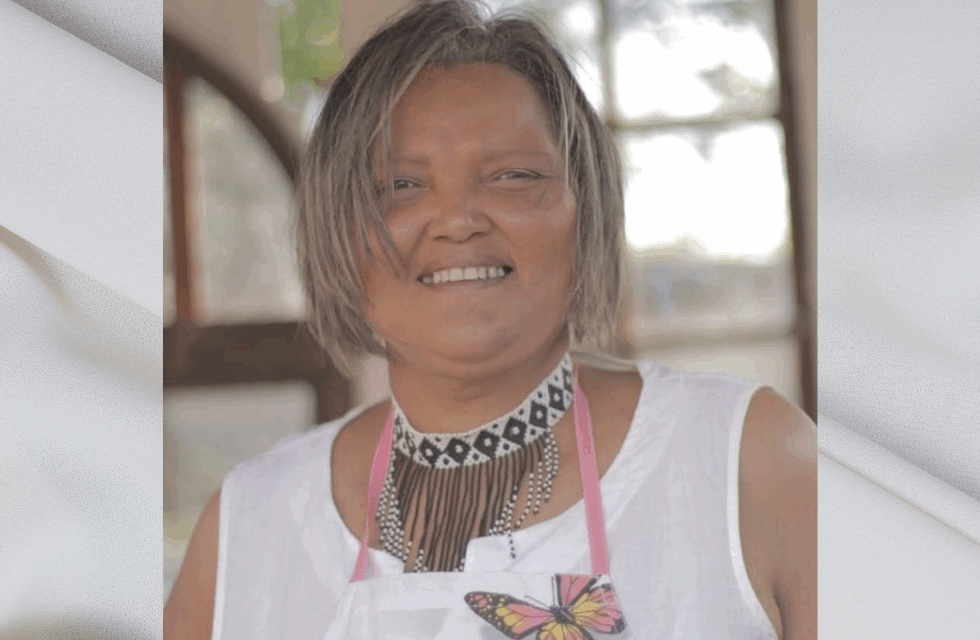
By Henriette Abrahams
Today marks 38 years since my comrade, mentor, and leader Ashley Kriel was murdered by the apartheid regime—shot and killed by Jeffrey Benzien on 9 July 1987.
I was recruited onto the Student Representative Council (SRC) in 1983 by Ashley. Alongside him, I served in both the SRC and the Bonteheuwel Interschool Congress (BISCO) until the day he was forced into exile. When he left, we were ready—because he made sure we were ready. And lead we did. Grow the movement we did.
Ashley didn’t just organize us—he politicized us. He taught us that our struggle was both local and global. It was through him and our collective leadership that I was introduced to the principles of non-racialism and class struggle. He grounded us in political education that stretched beyond the borders of Bonteheuwel and South Africa.
He wasn’t called the Che Guevara of the Cape Flats for nothing.
Ashley taught us about Steve Bantu Biko, Oliver Tambo, Fatima Meer, Joe Slovo, Fidel Castro, Karl Marx, Lenin, Frantz Fanon, Muammar Gaddafi—and so many others. We studied the struggles of our comrades in Palestine (PLO), Ireland (IRA), Brazil (Zapatistas), Namibia (SWAPO), Mozambique (FRELIMO), Zimbabwe (ZANU PF), and the long resistance in Cuba and the USSR against imperial domination.
He shaped in us a deep solidarity with oppressed people across the world. Ashley was an internationalist. A class-conscious, non-racial, grounded leader. He was never detached from the struggles of our people. He immersed himself in our pain because it was his pain too.
He was not a narrow nationalist. He rejected tribalism and identity politics that served to divide. He believed in building power from below—informed by love, justice, and collective liberation.
The Politics of Now – A Betrayal of the Vision.
Today, Ashley Kriel has become an icon. His name is chanted—“Viva Ashley Kriel, Viva!”—by party leaders and groupings whose practices and beliefs stand in direct contradiction to what Ashley stood for, fought for, and ultimately died for.
We see political parties operating on a George Orwell Animal Farm logic—preaching unity while practicing divide and rule. We see groupings stoking narrow tribalist and identity politics, abandoning the non-racialism and solidarity that defined our liberation struggle.
In the Western Cape, we now hear fellow South Africans from the Eastern Cape and other provinces being called foreigners in their own land. We see parties going into workplaces and businesses, demanding that only a particular race be employed within specific areas. These practices are not only unconstitutional—they are counter-revolutionary.
They betray a fundamental lack of political understanding of race, class, and gender politics. These are not the actions of comrades. They are the actions of people operating like agents of a third force, under the influence of puppet masters whose mission is to destabilize our poor communities and divide the working class.
Now, we also see these parties and groupings denying critical health services to our African brothers and sisters—turning away the sick, sending women in labour back into the streets. This is inhuman. This is violence in its most institutional and brutal form.
These attacks are not about legality—they are about race, class, and xenophobic scapegoating. These parties do not go into leafy white suburbs and harass documented or undocumented white foreigners. No, their focus is laser-locked on the most vulnerable: refugees, migrants, and the poor—the very people we should be standing beside.
Surely this must point again to a deeper agenda: one that mirrors the tactics of a third force—to clear our communities of solidarity, of unity, and of our shared African identity.
This is not what Ashley stood for.
Let me be clear: Ashley Kriel, too, was once an undocumented foreigner in Angola. No papers. No formal access to healthcare. He survived because Angolan people took him and other freedom fighters in —not because of documentation, but because of shared humanity and solidarity.
On Palestine, Hypocrisy, and the Echoes of Betrayal
Ashley, like many of us in the 1980s, wore the keffiyeh—the Palestinian scarf. We stood resolute in solidarity with our people in Palestine. We mobilized against the brutal apartheid Israeli state, just as our comrades abroad mobilized against the brutal apartheid South African state.
Today we see parties—including leaders of colour—chanting “Viva Ashley Kriel Viva” while denying that Israel is an apartheid state, even after the ICJ has ruled that there is a plausible case of genocide. These same parties are now part of the Government of National Unity, and yet it was our government that took the case to the ICJ.
So why this silence? Why this betrayal?
Perhaps the answer lies in money, in business promises, in kickbacks and equity deals. Whatever the reason, it reeks of the sellouts and impimpis of the past—those who collaborated with the enemy and betrayed their people for power.
So let it be clear Ashley was a Pan-Africanist and Internationalist at heart and in his actions and he and others didn’t give their lives for the coloured child only, they sacrificed their lives for freedom for all South Africans and all poor and oppressed people up our continent and around the world.
The Battle Over Memory
Lastly, we must confront the erasure of our heroes—Ashley Kriel, Christopher Truter, Anton Fransch, Coline Williams, and others. For four decades, the likes of Angus McKenzie and his predecessor Patrick McKenzie have worked to wipe these names from our community memory. Today, Angus tells us we live in the past, that Bonteheuwel has “new icons”—coincidentally, ones who support his party.
For years, we’ve tried to rename schools, streets, and public spaces to honour those who died for our freedom. But the Democratic Alliance refuses. Our heroes are not white enough, not compliant enough, not controllable enough.
Because if they are remembered properly, they will expose the DA’s falsified narrative—a narrative that denies the brilliance, courage, and revolutionary clarity of poor, coloured, Black, and working-class leaders.
This is not only a political failure. It is a spiritual and moral one. It is apartheid’s afterlife.
Let Us Be Clear
Let us preserve the legacy of our comrade, mentor, leader, and icon.
Let us write it down completely.
Let us call out those who misuse his name and image for their own gain.
Let us raise our children to know the truth.
And let us honour Ashley Kriel, not with empty slogans—but with unshakeable commitment to the revolutionary values he lived and died for:
Solidarity. Truth. Non-racialism. Class struggle. And international solidarity.
Ashley Kriel is a big name. And over the years, I’ve come across many who use his name under the guise of telling his story, or launching projects in his name. We must guard his name, and those of others who gave their lives, from being misused—especially by those doing “legacy work” only to access funding, with no true or lasting benefit for the poor, for our youth, or for our communities.
We cannot allow struggle icons to become funding tools.
Their names are sacred.
Their stories are political.
Their legacies belong to the people.
Not in his name will we be divided.
Not in his name will we forget.
Ashley Kriel lives. In struggle. In memory. In us.