By Zubeida Jaffer
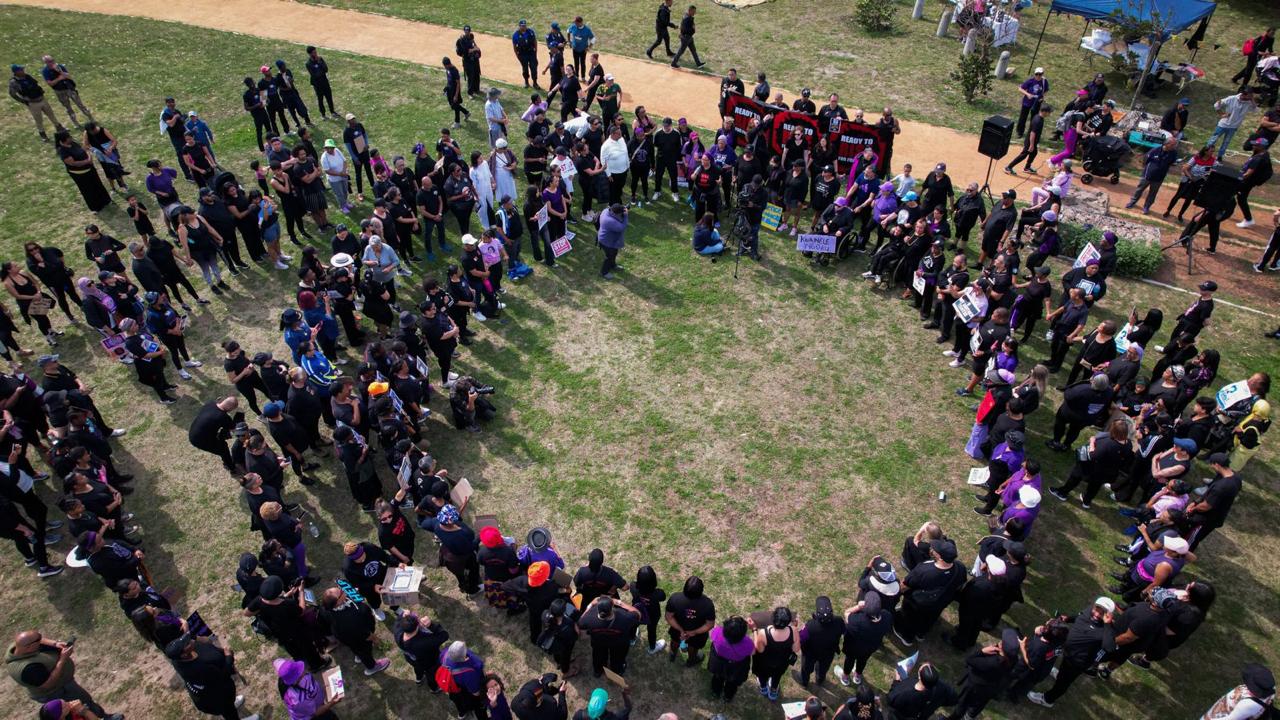
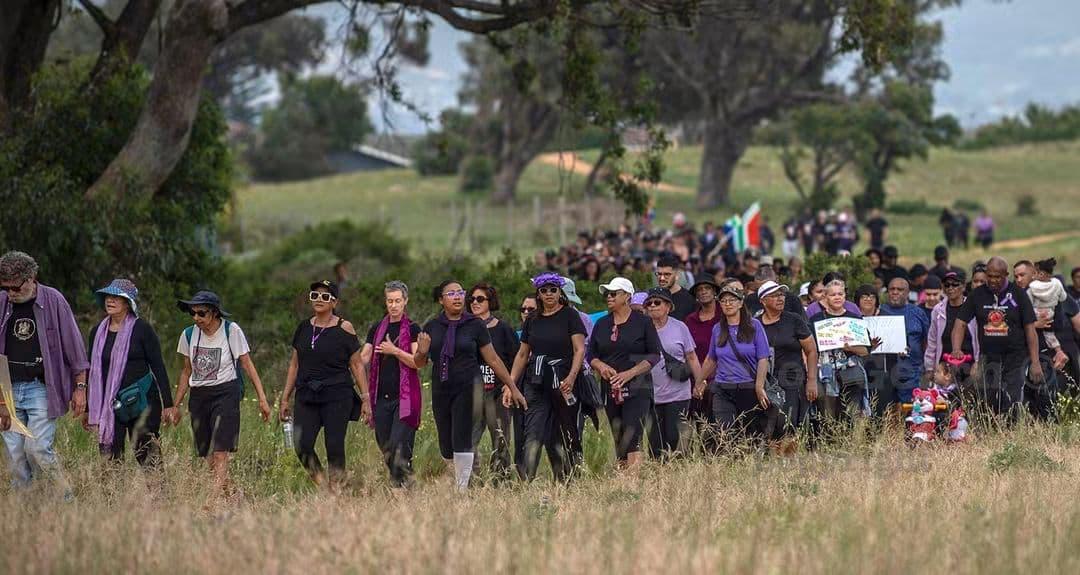
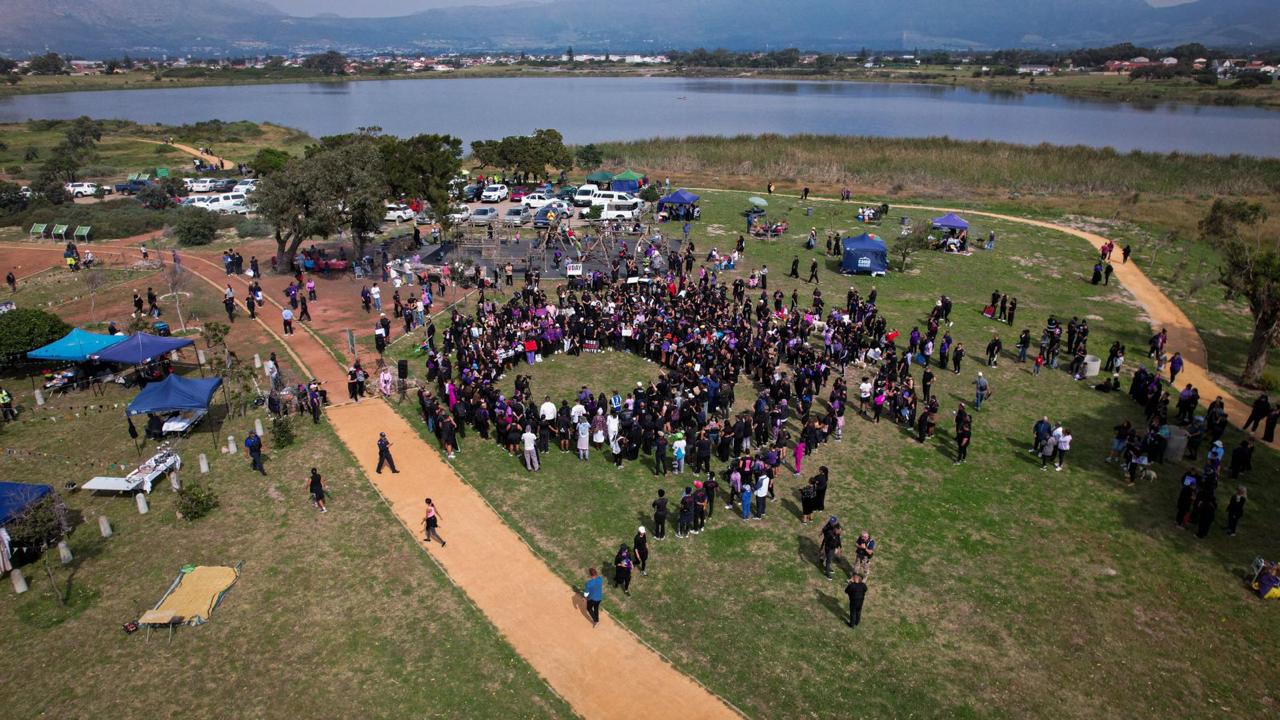
Princess Vlei in Cape Town’s Southern Suburbs became a sea of purple and black on Heritage Day in protest against the wave of violence and killings of women in the country.
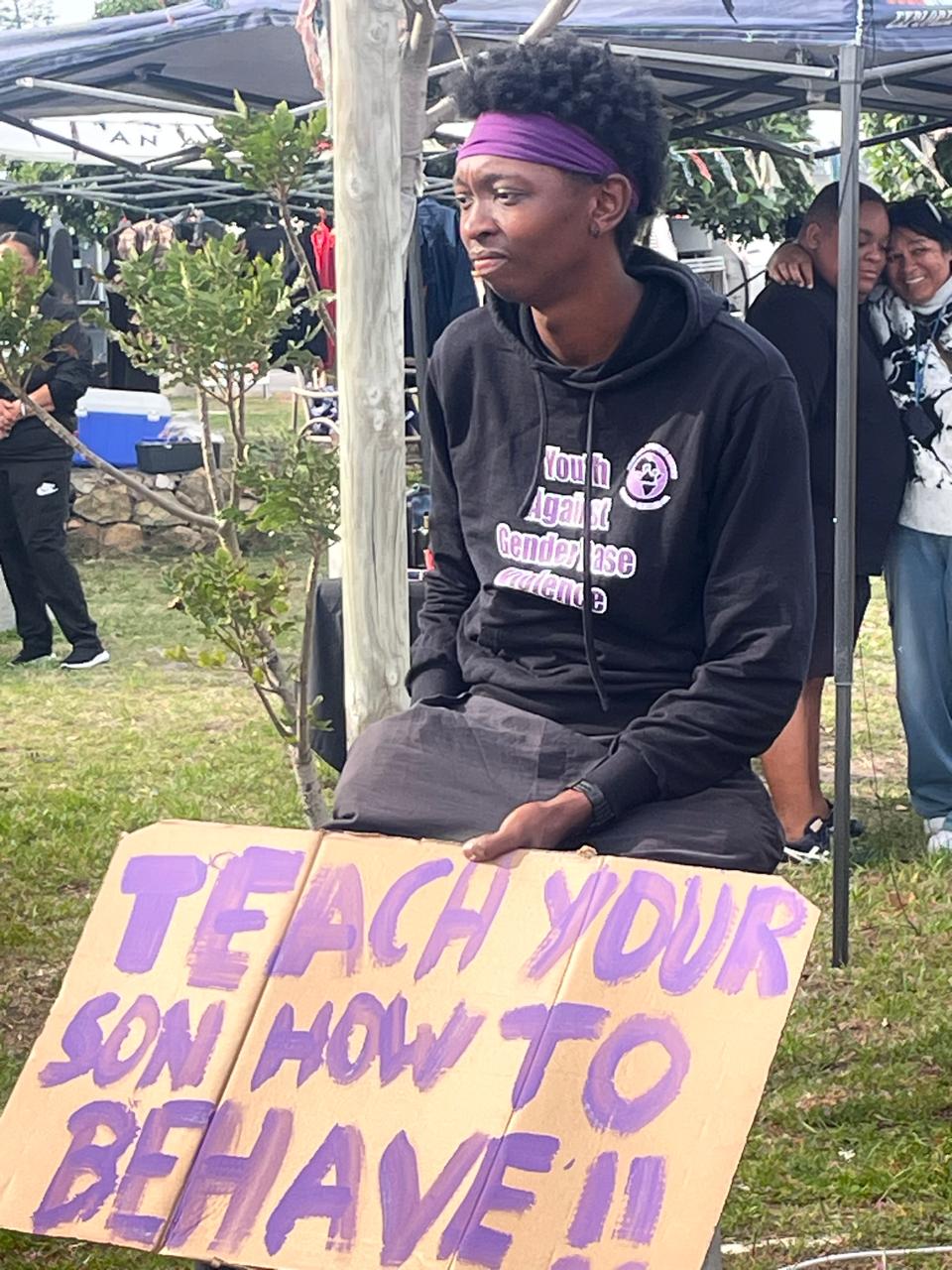
Hundreds of women, men, children and a dog wound their way down the newly established pathways around Princess Vlei, carrying placards expressing their anger and grief.
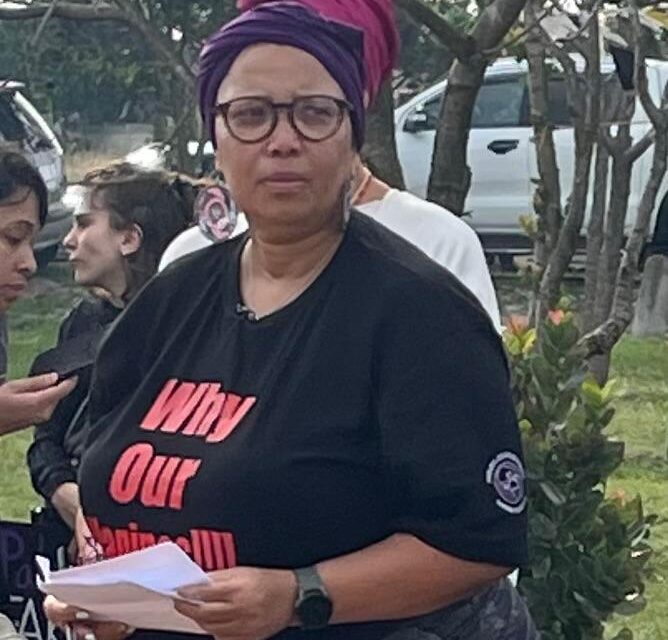
Community activist Lucinda Evans, the founder of Philisa Abafazi Bethu (Heal our Women), called on community members to step out and said she would continue to arrange similar efforts regularly. She paid tribute to survivors of sexual violence and said they would not be forgotten. “To the women who were raped when they were two, 14, 20, 60, we will continue to hold you,” she said.
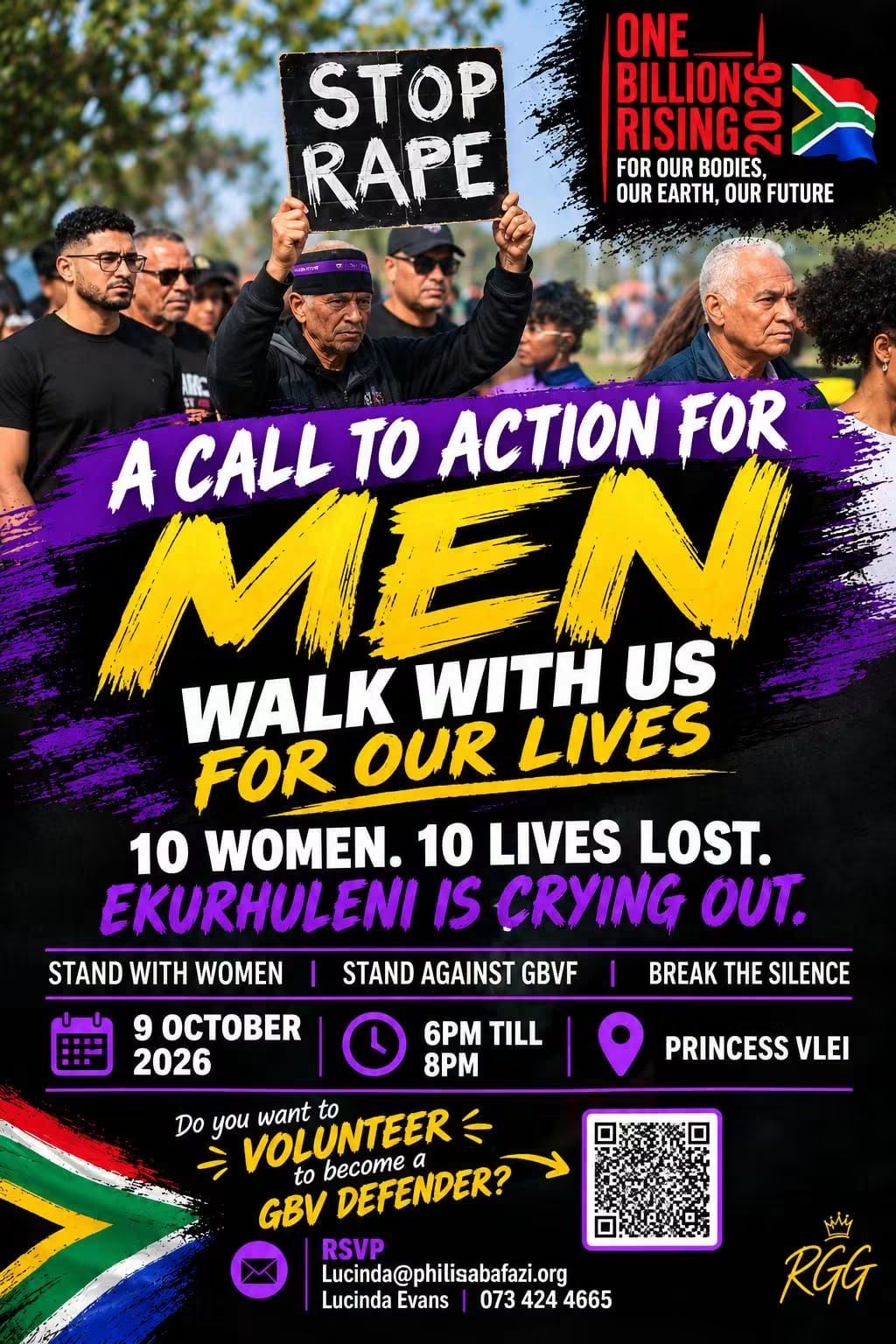
Evans thanked the men who had joined the march. “Let’s open the spaces for men to be part of the solution to the big problems we have,” she said. She has called on men to come out in their numbers on 9 October. See the poster below.
Her organisation is based in Steenberg and offers a range of services for abused women, child protection and community support. These include after-school programmes and community feeding for children.
The event had a further significance. If the City of Cape Town had had its way more than ten years ago, this heritage area would have been a shopping mall, leaving no space for locals to enjoy areas of natural beauty and historical significance near their homes.
Activists formed the Princess Vlei Forum, bringing together residents, environmentalists, heritage advocates, schools, civic organisations and community leaders.
Residents organised meetings, petitions, demonstrations, clean-up campaigns and public events to draw attention to the value of the vlei. They also highlighted the wetland’s ecological importance, arguing that it helped support biodiversity, manage water and provide open space in an area where many communities lacked accessible green areas.
Princess Vlei drew its name from a Khoi princess, carrying memories of indigenous history, forced removals and the experiences of Cape Flats communities. According to oral history accounts, the Khoi princess was abducted and abused by Portuguese soldiers. She had to flee into the Tokai mountains.
Her tears were said to have formed the large pool of water known as Princess Vlei.
Activists successfully argued that this heritage should be acknowledged rather than erased by commercial development.
In 2014, the mall development was stopped, and instead the Princess Vlei Forum won the cooperation of the City of Cape Town and designed the space according to the community’s vision.
Lucinda Evans could not have selected a more appropriate space to hold not only the tears of South African women, men and children, but at the same time to remember the tears of the Khoi princess.
It is perhaps appropriate to acknowledge those activists who made it possible for this substantial ribbon of black and purple to wind around the vlei, with residential homes nearby.
The Princess Vlei Forum was a broad community movement rather than the work of one person. Its campaign brought together residents, environmentalists, heritage activists, civic organisations and local volunteers who opposed the mall and developed an alternative vision for the wetland.
Several individuals were especially prominent:
- Bridget Pitt — A leading spokesperson and chairperson of the Princess Vlei Forum. She helped articulate the case for protecting the vlei and promoting it as a public environmental and heritage space.
- Philip Bam — A key campaign organiser who helped mobilise communities against the proposed development and advocate for the vlei’s conservation.
- Mary Ann Jansen — A Khoisan community activist who emphasised Princess Vlei’s indigenous history and cultural significance.
- Kelvin Cochrane — A local fynbos enthusiast who initiated “Dressing the Princess”, an early restoration project focused on planting indigenous vegetation and improving the neglected landscape.
- Emma Oliver — A Forum member involved in the campaign and the later public celebration of the mall’s cancellation.
- Gary Stewart and Chief John Jansen — Forum members associated with the campaign and with representing community and heritage concerns.
- John Prince and Malcolm Campbell — Volunteers who contributed technical assistance, including help with mapping the proposed walkway route.
- Besides the volunteers, Denisha Anand, the project manager from 2017 to 2026 was instrumental in guiding the forum and City in the restoration and development of the space.
Together, these activists helped turn opposition into a positive community programme.
For anyone who wants to republish this article, kindly acknowledge that it was first published at www.zubeidajaffer.co.za. (jaffer.zubeida@gmail.com)
Write to Lucinda Evans at Lucinda@philisaabafazi.org if you would like to help support her efforts in any way.
Photos
Lucinda Evans addresses the crowds. (Zubeida Jaffer)
A protester at the march. (Zubeida Jaffer)
Crowd photos (Cedric Balaguier).
Poster for 10 October march for men.