By Zubeida Jaffer
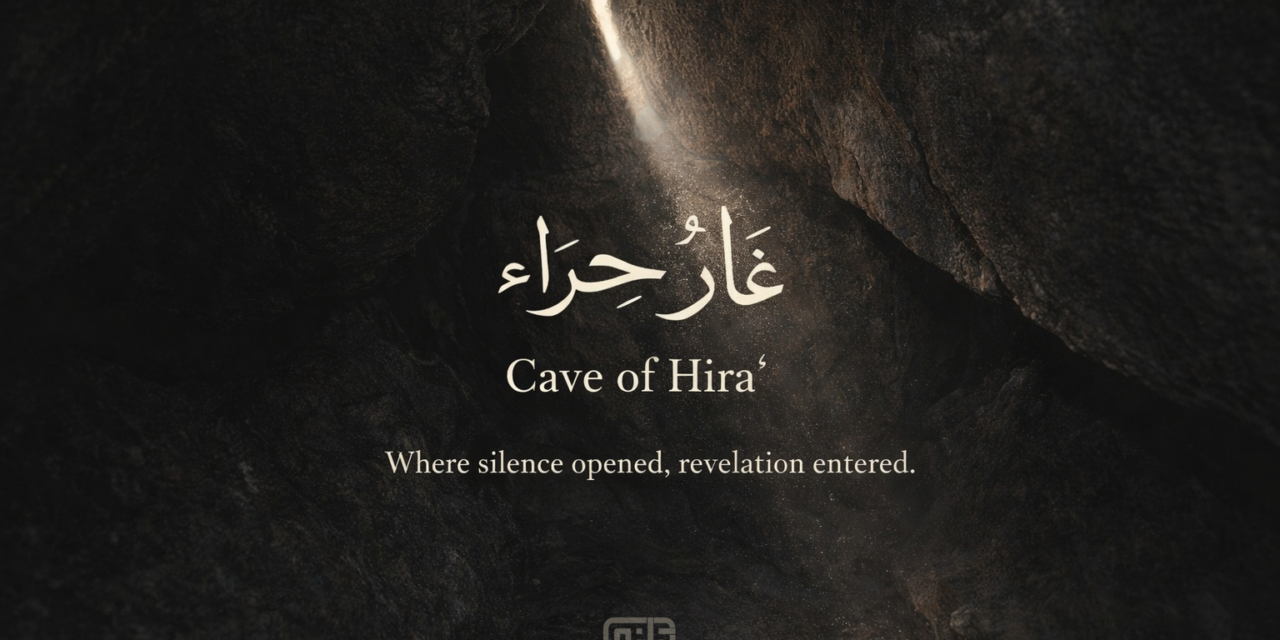
Nine years ago, in this month of August, I entered the Holy City of Mecca to perform the pilgrimage. (Read Sharing my haj experience, www.zubeidajaffer.co.za) During this time, I had the opportunity to travel to the Mountain of Light where the Holy Quran was revealed. To reach there in time for the sunrise prayer, I had to leave with a busload of other pilgrims around 3am. It was just a maximum of 5 kilometers away but once we arrived there, we had to start the climb to the top. Once on top I could see people huddled around the opening of the little cave where the revelation occurred. It was not possible for me to get close. I enjoyed being conscious of the special place to my right while I said my prayers.
Then a beautiful piece of writing flitted across my screen this week as if to remind me of a deeply spiritual moment nine years ago. Creative writer Adli Jacobs/Yacubi told the story far more eloquently than I could. I have decided to share with you, dear readers, his words. They tell of a moment in my Mecca experience that I remember most clearly and that I hold dear to my heart virtually every day since then. I felt my body twirl in an anticlockwise direction with my feet firmly placed on the prayer mat. And this twirling lasted for a few weeks after my return home. From my limited knowledge, I assume it was atoms bouncing around in the high-energy setting raining down on that mountain. I accept that I do not know. I felt it. I remember it deep in my bones. This is the first time that I am sharing the moment.
Allow Adli Yacubi’s beautiful words to provide further insight:
The Crack in the Mountain
The Cave of Ḥirāʾ and the Silence Before Revelation
By Adli Yacubi
High above the valley of Makkah, carved into the rough flank of Jabal al-Nūr — the Mountain of Light — there is a narrow cave between stones.
It is not large.
It is not majestic.
It is simply a small opening in the rock, just wide enough for a man to sit alone.
This was غَارُ حِرَاء — Ghar Ḥirāʾ.
Even its name is not light on the tongue.
Ḥirāʾ begins with a breath drawn from within —
as if the place itself is teaching you how to enter.
Today pilgrims climb the mountain to see it, often surprised by how modest it is. The cave is barely a few meters long, its floor uneven, its walls raw stone. There is no sense of grandeur here.
Only silence.
Yet from this narrow space began one of the most transformative moments in human history.
The Climb of Solitude
Before revelation came, the Prophet Muhammad ﷺ had already begun withdrawing from the noise of Makkah.
The city below was alive with trade, poetry, tribal rivalry, and the rituals of idols. But something within him sought a different horizon.
The early sources describe how he would climb Jabal al-Nūr and remain in the cave for periods of contemplation, especially during the nights of Ramadan. The Arabs called this practice taḥannuth — a retreat from worldly distraction to reflect upon creation and the One who made it.
Some later traditions speak of extended retreats — long periods of withdrawal. But what is certain is this: he returned again and again to that cave, remaining for many nights, until silence itself became a kind of knowing.
There were no followers.
No scripture yet.
No public mission.
Only a man climbing a mountain in search of truth.
In that cave he prayed, reflected, and watched the vast desert sky above Makkah.
History often remembers the moment of revelation. But the cave reminds us that before revelation there was silence.
The Crack Where Light Enters
Inside the cave there is a narrow opening in the rock — not a grand window, just a slender gap where light slips through.
It is a small detail.
But sometimes the smallest openings change everything.
One night, in that quiet place, the silence broke.
The angel Jibrīl عليه السلام descended and embraced the Prophet ﷺ with words that would echo through centuries:
اقْرَأْ
Read.
Recite.
Proclaim.
He was unlettered — and yet commanded to read.
Not from a page, but from what had been placed within him.
Not the decree of a king.
Not the command of an empire.
But the first word of the Qur’an — a call to knowledge, awareness, and remembrance.
The Qur’an did not descend into a palace or temple.
It descended into a cave carved into stone — into a heart that had already learned how to listen.
He Descended Trembling
Revelation did not arrive as calm certainty.
It came as an overwhelming encounter.
When the angel Jibrīl عليه السلام first appeared in the cave and commanded “Iqraʾ”, the Prophet ﷺ was shaken by the intensity of the moment.
He left the cave and descended the mountain quickly, his heart racing.
Imagine that descent.
Night over the mountains of Makkah.
The path of stone beneath his feet.
The words of revelation still echoing within him.
He hurried home.
When he reached Khadīja رضي الله عنها he said:
“Zammilūnī, zammilūnī — Cover me, cover me.”
She wrapped him in a cloak until the trembling subsided.
Then she listened.
Not with doubt.
Not with fear.
But with the steady faith of a woman who knew the character of the man before her.
She reassured him with words that history has never forgotten:
“By Allah, Allah will never disgrace you.
You uphold family ties, you help the poor,
you honour the guest, and you stand with those in need.”
Her reassurance was not mere consolation. She looked at the whole of his life. The man who honoured kinship, carried the burdens of others, welcomed the guest, and stood beside the afflicted could never be abandoned by the Lord who had fashioned such a character. Her comfort was born not only of love, but of a clear recognition of the truth she saw before her.
In that quiet home in Makkah, before the message spread to the world, there was a moment of profound loyalty and recognition.
Khadīja رضي الله عنها believed in him.
She became the first Muslim.
Before the public proclamation of Islam, before the gathering of companions, before the Qur’an flowed across Arabia, there was this intimate scene:
A trembling prophet.
A faithful wife.
A cloak of comfort.
The first revelation did not begin with crowds.
It began with trust.
Wrapped in Revelation
Soon Revelation itself would speak to that trembling state:
“O you wrapped in garments…”
(Yā ayyuhā al-Muzzammil)
And then:
“O you enveloped in a cloak — arise and warn.”
(Yā ayyuhā al-Muddaththir)
It was as if the Qur’an was addressing not only the Prophet ﷺ, but also the trembling human being beneath the cloak.
The cave had prepared him for silence.
The cloak prepared him for the weight of revelation.
For the words that followed were not light words:
“Indeed, We will cast upon you a weighty word.”
(Qur’an 73:5)
The man who sought solitude in a narrow cave would now carry a message vast enough to transform the world.
A Heart Turned Toward the Sacred House
Years later, after migration to Madinah, another moment of longing would come.
For a time the Muslims prayed toward Bayt al-Maqdis in Jerusalem. Yet the Prophet ﷺ would often raise his face toward the heavens, hoping that the direction of prayer might return to the Kaʿbah in Makkah — the sanctuary built by Ibrahim and Ismaʿil عليهما السلام.
The Qur’an records this moment with remarkable tenderness:
“We have certainly seen the turning of your face toward the heaven. So We will surely turn you to a qiblah that will please you. Turn your face toward al-Masjid al-Ḥarām.”
(Qur’an 2:144)
A quiet longing became revelation.
And the direction of an entire community changed.
The gaze of one heart became the orientation of a civilisation.
The Lesson of the Cave
The cave of Ḥirāʾ teaches something profound.
Revelation does not descend into crowded hearts.
It enters hearts that have made room for silence.
The mountain remains today — still rugged, still quiet, still overlooking the valley of Makkah. Pilgrims climb its slopes and peer into the narrow space where the first words of the Qur’an were spoken.
But the true journey of Ḥirāʾ is not a climb through rock.
It is a journey inward.
Every soul carries its own mountain.
Every heart has its own cave.
And sometimes all that is needed is a small opening — a crack in the stone of our distractions — through which light can enter.
For the first light that entered Ḥirāʾ did not spread across the world immediately.
It first descended a mountain, trembling, and found shelter in the arms of Khadīja رضي الله عنها.
From a crack in a mountain…
to a home in Makkah…
to a message that would illuminate the world.
The original article can be viewed at: