Credit ratings are not fair towards African Economies:
Africa Must Stop Exporting Wealth and Importing Creditworthiness
By Prof Nicky Morgan
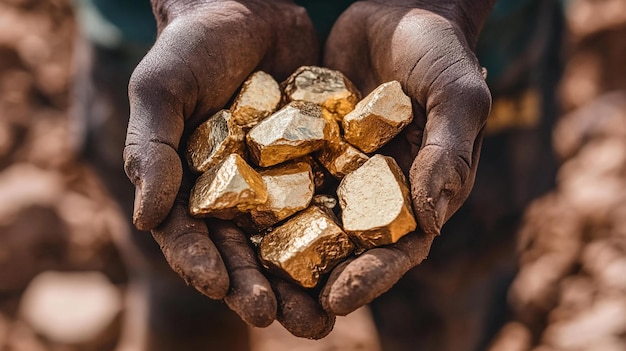
Africa finds itself in a peculiar and deeply consequential paradox. The continent possesses some of the world’s richest deposits of strategic minerals, yet remains among the least trusted destinations in global financial markets. We supply the cobalt that powers electric vehicles, the platinum that supports industrial innovation, the lithium that underpins the global energy transition, and the rare earth elements essential to advanced technologies. Yet when international credit rating agencies assess our economies, they often see risk where the world should see wealth.
This contradiction raises an uncomfortable question: how can a continent so rich in assets remain so poor in creditworthiness?
For decades, African governments have accepted the judgments of the world’s three dominant credit rating agencies as though they were objective and immutable. Sovereign ratings influence borrowing costs, investor confidence, and access to development finance. A downgrade can trigger capital flight, increase debt-servicing costs, and undermine economic recovery efforts. Yet the methodologies employed by these agencies frequently fail to capture the true value of Africa’s embedded wealth.
Consider the Democratic Republic of Congo. It supplies more than 70 percent of the world’s cobalt, a mineral indispensable to the global green economy. Zimbabwe possesses some of the world’s largest lithium reserves, increasingly sought after by battery manufacturers and technology companies. South Africa remains home to the overwhelming majority of the world’s platinum group metal reserves. These are not speculative assets. They are tangible stores of value embedded within the continent’s geology.
Yet these assets are largely absent from the calculations that determine African creditworthiness.
The time has come for Africa to challenge this imbalance through the development of a Rare Mineral Standard.
The concept is inspired by a simple historical lesson. For much of modern economic history, confidence in currencies was anchored by the gold standard. Nations demonstrated credibility through tangible reserves. While no one advocates a return to the gold standard itself, the principle remains relevant: confidence is strengthened when economic claims are linked to real assets.
A Rare Mineral Standard would establish a verified and transparent measure of the value of strategic mineral reserves across Africa. Such a standard could inform sovereign credit assessments, support the issuance of development bonds, and provide an additional benchmark for evaluating national economic strength. It would not replace conventional indicators such as debt levels, fiscal discipline, inflation, or governance performance. Rather, it would complement them by recognising a dimension of wealth that is currently undervalued.
Critics may argue that mineral wealth cannot substitute for sound institutions and effective governance. They are correct. Resource abundance alone does not guarantee prosperity. History provides many examples of countries blessed with natural wealth but burdened by corruption, conflict, or poor policy choices.
But this is not an argument against recognising mineral assets. It is an argument for managing them responsibly.
The more revealing comparison is with the United States. The world’s largest economy currently carries public debt exceeding 120 percent of GDP. Yet it continues to enjoy relatively strong sovereign ratings and remains a preferred destination for global capital. The explanation lies not merely in fiscal metrics but in institutional confidence, reserve currency status, deep financial markets, and geopolitical influence.
In other words, the global financial system already recognises forms of wealth and power that extend beyond debt ratios.
The question is why Africa’s strategic mineral wealth receives so little comparable recognition.
When a country with debt levels above 120 percent of GDP is regarded as a safe haven while resource-rich African economies face punitive borrowing costs, it becomes difficult to avoid the conclusion that current rating methodologies contain structural biases. These biases may not be intentional, but their effects are real.
A Rare Mineral Standard would not magically transform Africa’s economic fortunes. It would, however, begin to rebalance the conversation. It would provide a credible framework through which African nations could demonstrate their asset base, negotiate more effectively with investors, and challenge assumptions that have long constrained the continent’s development prospects.
Importantly, such a standard should be developed collectively through institutions such as the African Union, the African Development Bank, the African Continental Free Trade Area, and regional economic communities. Transparency, independent verification, and strong governance would be essential. The goal is not to inflate asset values but to ensure that they are fairly recognised.
The twenty-first century will be defined by the global competition for critical minerals. Africa sits at the centre of this transformation. Yet if the continent continues to export raw minerals while importing external judgments about its worth, it risks repeating the patterns of dependency that have characterised much of its economic history.
Africa must move beyond being merely a supplier of strategic resources. It must become a shaper of the standards by which wealth, risk, and economic value are measured.
The continent should not have to borrow credibility from others when it already possesses the assets to help define it for itself.
28 July, 2026.
Professor Nicky Morgan is an experienced higher education leader who guided institutions through transformation, crisis, restructuring, governance renewal and merger integration. He was shaped in the politics of the turbulent 70’s.