By Zubeida Jaffer
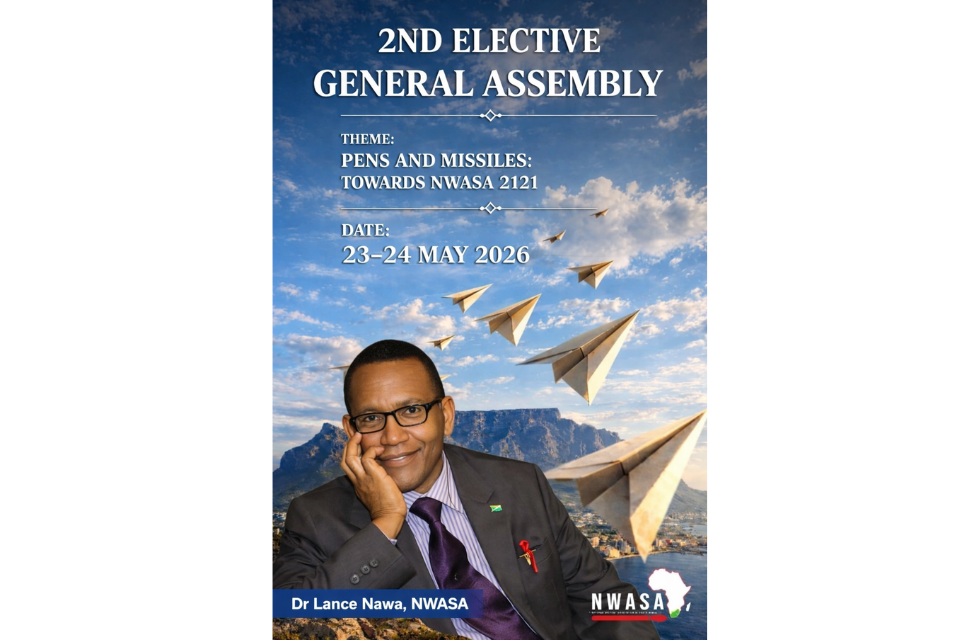
Nobel literature laureateJ M Coetzee has commended the National Writers Association of South Africa (NWASA) and its members on the eve of the organisation’s 2nd Elective General Assembly set for this weekend (23 and 24 May 2026).
He penned a letter to secretary-general Dr Lance Nawa saying the following: “ I would like to say that I commend NWASA and its members for taking a stand against the genocide in Gaza, and look forward to the day when the architects of the genocide are brought before the International Court of Justice to answer for their crimes.”
The Nobel laureate’s comments come amid a widening dispute over correspondence between Coetzee and the organisers of the Jerusalem Festival, after the festival published selective extracts from his reply declining an invitation to attend their May 2026 event.
Background to the exchange
In the letter to NWASA, Coetzee said he received the festival invitation in November 2025 and replied that month, declining to attend. In his response he cited his “abhorrence at the actions of the Israeli government in Gaza over the preceding two years” and said the Israeli artistic and intellectual community had not done enough to condemn those actions and was therefore, in his view, “to a degree complicit.”
He said he regarded the matter as closed after sending that reply. Six months later, he said, the festival made the correspondence public and quoted selectively from his email while omitting the festival’s own invitation, which he says framed the event as a celebration of the return of the last Israeli hostage and made no reference to “the tens of thousands of Gazans” killed by Israeli strikes.
On accusations of a boycott
Coetzee also addressed accusations that his refusal to attend amounted to a boycott of the festival. He argued that a boycott, as defined by standard dictionaries and legal sources, is a concerted action — a coordinated refusal by multiple actors — rather than a single individual’s decision not to accept an invitation.
Citing Merriam-Webster, Coetzee wrote that to boycott is “to engage in a concerted refusal to have dealings with (a person, a store, an organization, etc.) usually to express disapproval.” He added a parenthetical note pointing out that participation in Boycott, Divestment and Sanctions (BDS) campaigns can be illegal under certain jurisdictions, including parts of the United States.
Reaction and wider context
Coetzee’s statement, which reiterated his earlier criticism of Israeli policy and his support for NWASA’s stance, has drawn attention from cultural commentators, legal scholars and activists on both sides of the debate.
Festival organisers have not publicly responded in detail to Coetzee’s recent letter; when they released parts of the email exchange in May, they defended their decision to publish the correspondence as part of a public discussion around the festival’s programming and the complex politics surrounding the hostage return celebration.
Implications for cultural diplomacy
The spat highlights ongoing tensions in the arts and academic worlds over engagement with Israeli cultural institutions amid the Gaza conflict. Many artists and intellectuals have faced pressure from peers and audiences to either dissociate from or engage with events tied to Israeli state narratives. The debate has prompted renewed scrutiny of how festivals and institutions frame politically charged anniversaries or commemorations.