By Zubeida Jaffer
The United Arab Emirates’ late Sheikh Rashid bin Saeed Al Maktoum once said when asked how he saw the future of his country:
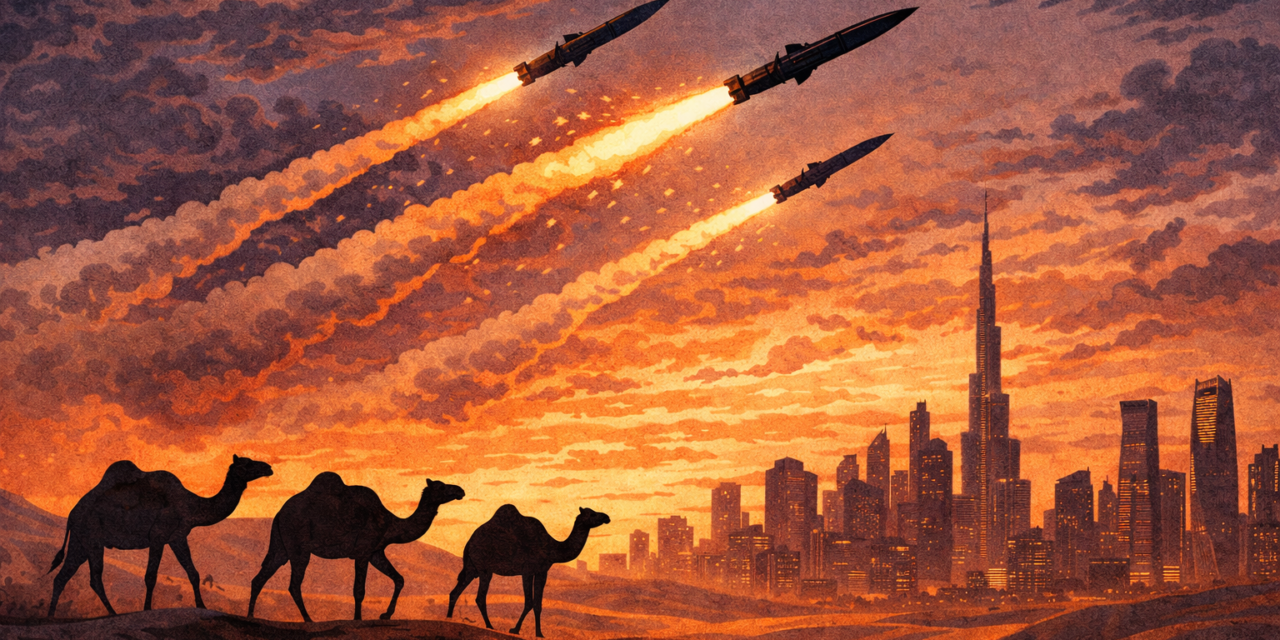
My grandfather rode a camel. My father rode a camel. I drive a Mercedes. My son drives a Land Rover. My grandson will also drive a Land Rover. But my great-grandson… will probably ride a camel again.
“Why would you say that?” they asked.
Because there are a few timeless truths that rule the world,” he explained. “Hard times create strong people. Strong people create good times. Good times create weak people. And weak people create hard times. Many won’t understand this, but prosperity doesn’t create fighters – it creates parasites. And that’s how good times disappear.
Sheikh Rashid bin Saeed Al Maktoum had played a pivotal role in the formation of the United Arab Emirates (UAE) in 1971 and witnessed its progress before he died in 1990. His interesting anecdote deserves deep reflection at this moment of crisis in the Middle East. After the USA and Israel launched an unprovoked attack on Iran, it became clear that they had shown little concern for the implications for the UAE, one of their strongest allies in the Middle east. Hosting USA military bases, pledging about $1.4 trillion in investments and cultivating commercial ties with President Trump’s family did not provide the safety net the UAE had banked on. Official diplomatic ties with Israel concluded in 2020 appeared to mean very little.
Once the USA and Israel attacked Iran, slaughtered their leader and decimated a school killing 170 young girls and others, Iran unleashed missiles and drones on USA military bases in all Gulf countries. The UAE found itself facing the brunt of Iran’s retaliatory missile and drone attacks in the Gulf region. This has undermined the stability premium that has been a critical part of the Gulf’s appeal for global investors and financiers. Leading UAE business people were taken aback by President Trump’s willingness to take risks that impacted them directly. In a post of X on March 5, a Dubai billionaire and hotel tycoon, Khalaf Al Habtoor did not mince his words in an open letter to President Trump.
Who gave you the authority to drag our region into a war with Iran? And on what basis did you make this dangerous decision? You have placed the countries of the Gulf Cooperation Council and the Arab countries at the heart of a danger they did not choose.
He queried what had happened to the monies pledged to the Board of Peace.
This imitative, a Gaza reconstruction plan supported by $7 billion in Gulf pledges for stability, is undermined by the escalation; are we funding peace initiatives or funding a war that exposes us to danger?
The Gulf Cooperation Council (GCC) is a political, economic, and security union comprising six Arab states bordering the Persian Gulf: Bahrain, Kuwait, Oman, Qatar, Saudi Arabia, and the United Arab Emirates (UAE). Headquartered in Riyadh, Saudi Arabia, its primary objectives include strengthening regional integration, fostering economic ties, and enhancing security. These countries created a military dependence on the USA which they had hoped would keep Israel on a leash. Over and above this, the UAE in particular, acted as an unofficial security partner and major trade hub for the USA in the Middle East. The two-week war against Iran threatens to bring all this to an end.
Oman, one of their member countries, was involved in facilitating negotiations between the USA, Israel and Iran. Shortly before the USA and Israel attacked Iran, Oman had given the Gulf countries and the world the assurance that negotiations were proceeding well and were on track. Oman’s Foreign Minister Badr bin Hamad Al Busaidi had said solutions had been identified. Despite this, Trump and Netenyahu walked away and launched the attack against Iran on 28 February 2026 raising questions about their end goals in the region.
Five days later, on 5 March, GCC ambassadors turned to Russia’s foreign minister, Sergey Lavrov for help at a gathering in Moscow. Lavrov made it clear that Russia stood in solidarity with all the Gulf countries who were suffering. He called for a united front to end the war.
Simply saying that Iran has no right to do anything effectively means openly encouraging the United States and Israel to continue what they are doing.
That makes no sense. Let us come together and call for ending all hostilities, beginning with a complete moratorium on attacks that lead to civilian casualties and the destruction of civilian infrastructure, as is happening in many Arab countries.
He concurred with the statement that the GCC countries had openly called for refraining from using military force against Iran and resolving all issues through diplomacy and political dialogue. Then he challenged them:
But when everything began despite your repeated calls to the United States and Israel, did you condemn what the United States and Israel started doing? Did you condemn the death of 170 schoolgirls?”
He nevertheless said further that the West had done everything in its power to block any positive agenda in the Gulf. And the key to all of this is, as ever, “divide and conquer.”
Has the time perhaps come for the UAE to reflect on Sheikh Rashid bin Saeed Al Maktoum’s anecdote and consider if nailing their colours to the mast of the USA and Israel has served their interests? Or will they see the disrespect and disregard in the unfolding events and do whatever they have to do not to let the camels appear on the horizon?