By Zubeida Jaffer
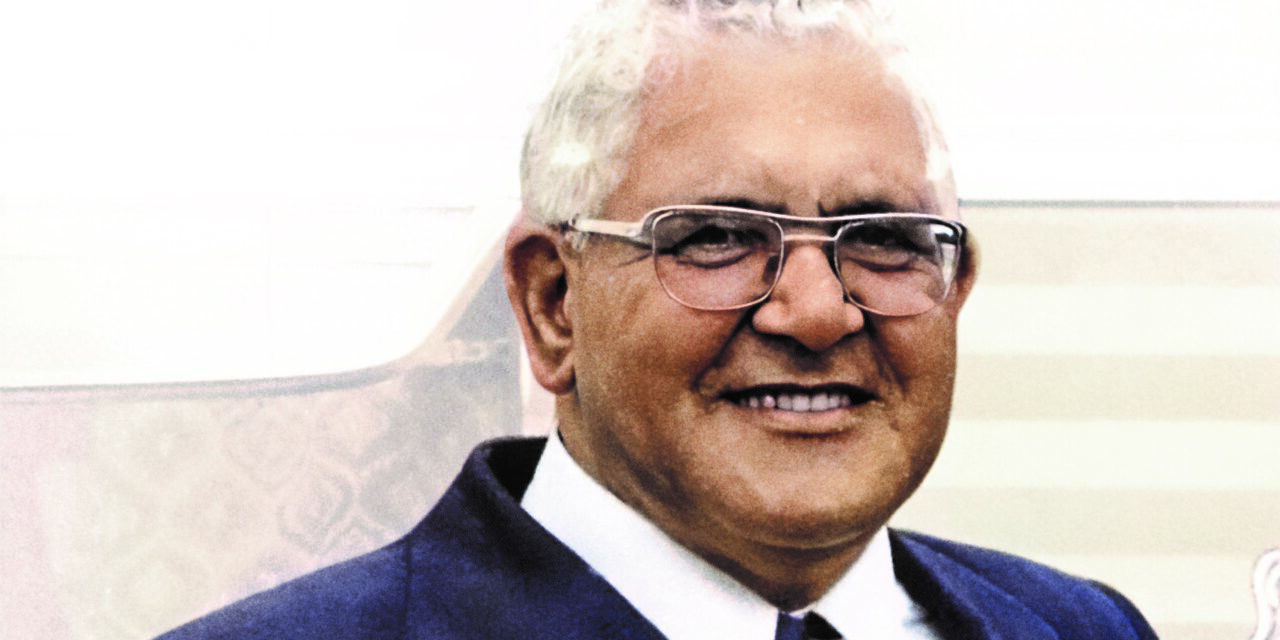
Veteran journalist, Dougie Oakes brings Hassan Howa’s courageous legacy to life in a page-turner volume gifted to South Africans and world sport.
Hassan Howa, No Normal Sport, A Biography of his Life and Times, is not just an account of a man with a huge heart but records the crazy times he lived through. A man who loved cricket and his community refusing to hold back when faced with a great travesty of justice.
Howa lived to see laws passed allowing only whites to participate in international sport and the structured exclusion of most South Africans from attending sporting events. “If separate entrances, separate seating and separate toilet facilities were provided, black people could attend provincial and international events, provided they did not ‘disturb’ the whites,” writes Oakes.
Government policy dictated that only black sportsmen from overseas would be allowed to compete against black sportsmen from South Africa.
A reader who wants to understand how Apartheid laws imposed itself on the everyday life of South Africans and set back sports organization, should read this book. Just one of the many examples that Oakes shares in essence illustrates the great damage done during those years. He writes that in the Northern Suburbs of Cape Town, black cricket lovers had to fight hard to keep the game alive when Goodwood was declared a white Group Area for the 3,000 whites living there (compared with the 13,000 coloured people forced to move). Not only was Avenirs, the champion club of the Maitland-Parow union, hit hard by an exodus of members, but they also lost their home ground. “A move to a vacant field next to a cemetery in Johnson Road, Athlone, was short-lived: the field was in a close -to -unplayable condition,” he writes.
For Oakes, Hassan Howa, the cricket administrator was the man who would be on the field at William Herbert Sports Ground in Wynberg helping to prepare the pitch with others before the game. He remembers him as the man who looked for spare white cricket pants that Oakes needed as a young player to participate in the game. He approached “better-off cricketers to lend their long trousers to someone they probably did not even know, so that this person could play for the Under-21s.”
Oakes cautions that white exclusivity did not start in 1948 with the rise to power of the National Party. “The building blocks of cricket, specifically, were assembled by colonialists in the middle of the 19th century and then used to help construct a society in which the “white race” was considered the only component,” writes Oakes.
He records the cricketing dramas of that time on a broad canvas showing the central role that Howa and others played. Oakes writes that Howa by his own admission had made mistakes, ‘hellish mistakes’. Despite this, “he led non-racial sport in a difficult, sometimes controversial, but always brave campaign to isolate apartheid sport and to highlight the hypocrisy that went with it.”
The Ottoman’s Cricket Club established in 1882 will appropriately launch this book on Saturday 24th October 2026. It is one of the oldest cricket formations in South Africa. This club located in Surrey Estate, Cape Town hosts the Hassan Howa Oval, reminding the next generation of the valiant efforts made to craft a non-racial sporting legacy in a country divided into separate racial boxes by colonial and apartheid dictates. He became the leader of the South African Council on Sport (SACOS) committed to stop sporting codes from defining South Africans by the colour of their skin.
To some extent this has been achieved but with a definite limitation that Oakes does not skirt around.
Despite the flowering of talented black cricketers and talent suppressed in all sporting codes, Oakes makes the argument that focus needs to be placed on developing sporting facilities in local townships and not just creaming off the top talent from townships and offering bursaries for them to attend former white schools. He writes that under the South African Schools Act 84 of 1996 all schools are required to have access to areas where physical education, sporting and recreational activities can be practiced. Such equitable access to sport is mostly non-existent, he writes.
More than 30 years after Howa’s death, Oakes concludes that sport in the Western Cape’s townships ‘is calling out for a new Hassan Howa.” The same can be said for sport across the country. And a careful study of this book should inspire current sporting codes to commit to deepening and broadening the ethos of non-racialism Howa led in sport and so many worked to achieve. There is work to be done.
22 October, 2026