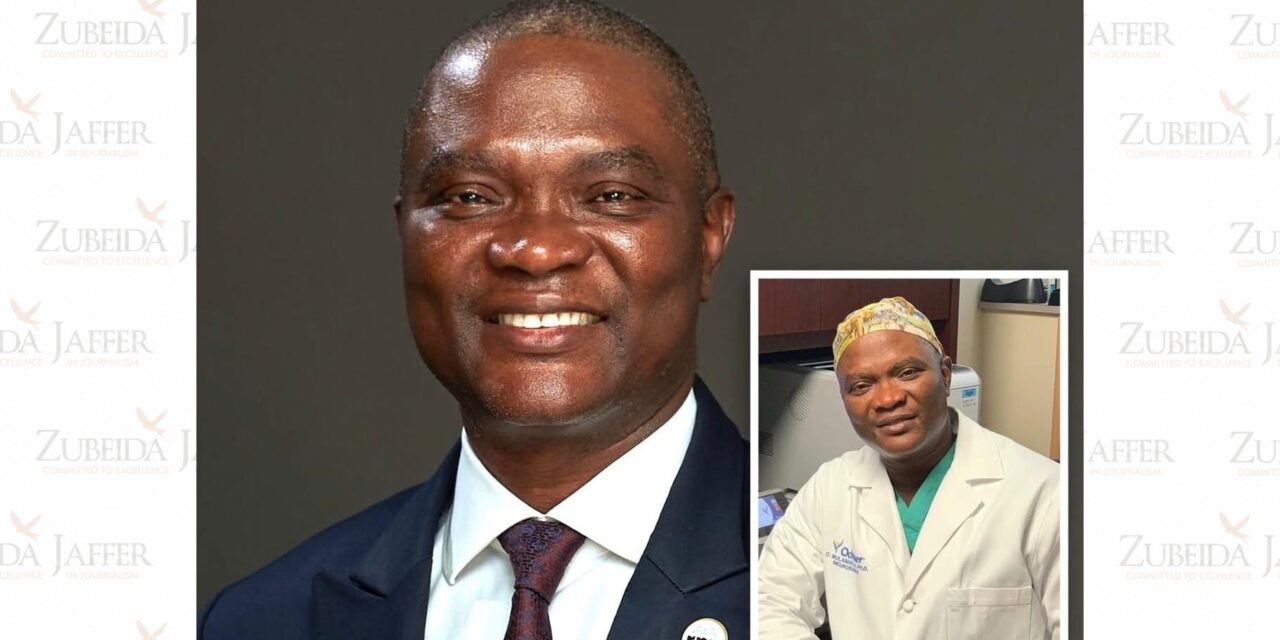
He grew up in one room.
Not one room to himself — one room shared with nine brothers and sisters, in a polygamous family on Lagos Island, Nigeria. They slept on mats on the floor. His parents had nothing to spare. University tuition was an impossible dream.
He was nineteen years old when everything changed.
The Nigerian government offered him a scholarship through an obscure program called the Bureau for External Aid — designed to give the country’s most vulnerable children a single door out of poverty. Most people have never heard of it. For Olawale Sulaiman, it was the only door that mattered.
That scholarship sent him to the Medical University of Varna in Bulgaria, where he earned his medical degree. Then a Master of Science. Then a PhD in neuroscience from the University of Alberta in Canada.
Then a neurosurgery residency. Then two elite fellowships — one in complex nerve reconstruction in Louisiana, one in complex spine surgery in Wisconsin.
He didn’t stop until he became one of the best spine surgeons in the United States.
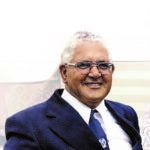
Today, Professor Olawale Sulaiman is Chairman of Neurosurgery at the Ochsner Neuroscience Institute in New Orleans — one of America’s most respected medical institutions. He trains the next generation of surgeons. He performs some of the most technically demanding spinal procedures in the country. His home country awarded him the Commander of the Order of the Niger, one of Nigeria’s highest national honours.
And then — every single month — he gets on a plane and goes home.
Since 2010, Dr. Sulaiman has been flying to Nigeria, spending up to ten days at a time performing surgeries, screening patients, and teaching local doctors techniques they have never had access to before. He brings surgical implants and equipment from America in his luggage. He stays until the work is done. Then he flies back to New Orleans, and the next month, he goes again.
To make it possible, he did something most people in his position would never consider.
He negotiated a pay cut with his employer — in exchange for the extended time he needed to keep showing up in Nigeria. His wife Patricia, a nurse practitioner and his partner in everything, didn’t hesitate for a moment. Together, they made the decision that giving back was not optional. It was simply who they were.
“We have never looked back,” he said.
One of his patients was a woman named Philomena Arah. She had spent fifteen years living with back pain so severe she couldn’t stand upright, couldn’t exercise, couldn’t live any version of the life she wanted. She had exhausted every option available to her in Nigeria.
Dr. Sulaiman’s team operated.
“After the surgery, I was reborn,” she said.
Through RNZ Global — the organization he and Patricia founded in 2010 — Dr. Sulaiman’s team has now performed over 500 surgeries and provided preventive care to more than 5,000 people across Nigeria. He doesn’t fly in, operate, and disappear. He trains local surgeons in advanced techniques.
He builds systems and capacity so the work continues long after the plane takes off.
He is building something that outlasts him.
His long-term vision is to establish dedicated neuroscience centers across Nigeria — so that one day, no patient has to wait for a doctor to fly in from America. So that Nigerians can receive world-class neurological care in their own country, from their own doctors, without waiting for charity or a monthly flight from New Orleans.
When people ask him why, he keeps it simple.
“Whether you are Nigerian, Vietnamese, or American — everybody should have access to some degree of good quality healthcare.”
And: “Happiness doesn’t come from what you get. It comes from what you give.”
He knows better than anyone what one scholarship can do.
He was that scholarship once — a boy on a mat on the floor in Lagos, handed one door he could never have bought himself.
He walked through it.
And he has spent every year since making sure others can too.
That is what he calls success.
Not what you accumulate.
Not what you keep.
What you give.
6 June 2026 This article was shared with me from the PAWA Book Club, Nigeria. PAWA is the Pan African Writers Association. The story originally appeared in Duke international magazine in the USA.