By Zubeida Jaffer
I was two years old when I arrived in Wynberg. This is where I grew up, and where I have lived on and off for 66 years. Today, I live on the same piece of land my father bought nearly 70 years ago, after our family had to leave Claremont when it was declared a white group area.
My brother still lives in the home where we grew up. I live on the plot behind it, where I have built a home. Between our two houses lives my mother, who turns 100 on 27 November 2026.
It has taken me a long time to turn my full attention to the neighbourhood in which I live. Perhaps the approaching milestone in my mother’s life has made the past feel closer. Perhaps it is simply time to understand more deeply the community that has shaped my life, and to dream of breaking down the old divides that haunt us so that we may find a path to greater cooperation for the common good.
I begin with the 2026 local government elections.
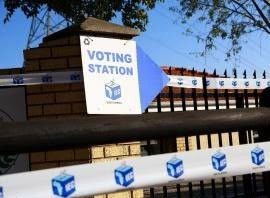
On 4 November, Wynberg residents did not vote as one community. The five voting stations examined here fall across two municipal wards, divided by Main Road and the railway corridor. Upper Wynberg, including Chelsea Village and Maynardville, falls within Ward 62. East of the line, Wynberg Central and Wittebome fall within Ward 63.
That division follows an older geography: the former white side of Wynberg, which developed around the former British military base, and the historically “non-white” side below the railway line. I use that apartheid designation with great caution.
Those categories no longer adequately describe the people who live on either side. But the geography they helped create still shapes the physical and social landscape of the suburb.
The City of Cape Town’s Census 2022 profile records 14,500 people in 5,200 households in the Wynberg suburb. Because Electoral Commission of South Africa (IEC) voting districts are drawn around polling-station capacity rather than strict suburb borders, the five Wynberg stations examined here also serve registered voters living along the immediate border edges of Plumstead, Kenilworth, and Wetton—accounting for a combined roll of 12,079 registered voters in 2026.
Wynberg remains divided by unequal access to space, security, services and opportunity. The former white side is no longer exclusively white, but it generally remains in a higher economic bracket than the community east of the line.
An analysis of Electoral Commission of South Africa results suggests that the election unfolded differently on either side of the tracks. More people voted at four of the five stations than in 2021. Yet the political pattern differed, and changes to voting districts complicate some comparisons.
A suburb, not a ward
Across the five voting stations examined here, registration grew from 11,708 voters in 2021 to 12,079 in 2026.
At NG Kerk Wynberg in Ward 62, registered voters increased from 3,676 to 3,976, while ballots cast rose from 1,853 to 2,344.
East of the line, participation increased at all three Ward 63 stations. At St Augustine’s RC Primary School, ballots cast rose from 701 to 937. At Focus College, they rose from 653 to 867. At Wittebome High School, they rose from 984 to 1,144.
The exception was Kemms Road Park Tent in Ward 62, where the figures require particular care. In 2021, the voting district operated from Timour Hall Primary School, where 2,043 of 3,656 registered voters voted. Before the 2026 election, Timour Hall Primary became a separate voting district in Ward 63. The remaining district moved to Kemms Road Park Tent, where 965 of 3,533 registered voters cast ballots.
Because the district changed, these figures do not provide a direct comparison of turnout among the same electorate.
The more revealing story lies in how people voted.
Continuity above the line
In Ward 62, Democratic Alliance incumbent Emile Langenhoven retained his seat with 7,579 votes out of 9,004 valid ward ballots. In 2021, he received 7,925 votes out of 9,128 valid ward ballots. The DA therefore remained overwhelmingly dominant across the wider ward, although its vote total and share declined.
The ward extends well beyond Wynberg into areas including Constantia, Plumstead, Bishopscourt, Bergvliet and Diep River.
Within the two Wynberg voting stations in Ward 62, the DA’s position remained secure.
At NG Kerk Wynberg, the DA received 1,788 of 2,334 valid ward ballots in 2026, up from 1,503 votes in 2021. GOOD received 118 votes, the ANC 82, ActionSA 71, the EFF 71, the Freedom Front Plus 54, the ACDP 20 and Al Jama-ah 20.
At Kemms Road Park Tent, the DA received 673 of 914 valid ward ballots. GOOD followed with 77 votes, ActionSA with 34, the EFF with 31, the Freedom Front Plus with 19, the ACDP with 15, the ANC with 14 and Al Jama-ah with four.
At NG Kerk, increased participation brought the DA more votes, but a larger vote total does not necessarily mean a larger share. The party nevertheless retained a comfortable majority at both stations.
Realignment below the line
Cross the railway line into the denser apartment corridors of Central Wynberg and the residential streets of Wittebome, and the election tells a different story.
Participation rose at all three stations. At Focus College and St Augustine’s RC Primary School, the DA’s vote grew much more slowly than the number of ballots cast, while Al Jama-ah expanded its support.
At Focus College, the DA received 323 of 859 valid ward ballots, almost exactly the 320 votes it received in 2021, despite more than 200 additional ballots being cast. Al Jama-ah more than doubled its ward vote, from 83 to 219. On the proportional representation ballot, Al Jama-ah received 273 votes against the DA’s 323.
GOOD received 52 ward votes, the ANC 51, the EFF 40, the National Coloured Congress 37 and the Cape Muslim Congress 36.
A similar shift occurred at St Augustine’s RC Primary School. The DA received 371 of 930 valid ward ballots, up modestly from 319 in 2021. Al Jama-ah doubled its vote from 101 to 204. GOOD received 71 votes, followed by the EFF on 49, the ANC on 47, the Cape Muslim Congress on 35 and the National Coloured Congress on 33.
At Wittebome High School, the DA won 567 of 1,142 valid ward ballots. Al Jama-ah finished second with 195 votes, ahead of GOOD on 73, the EFF on 70 and the ANC on 55.
This does not mean that Wynberg east of the line voted as one bloc. The DA remained the largest party at each station, while Al Jama-ah emerged as its strongest challenger. At Focus College and St Augustine’s, increased participation accompanied a shift in the distribution of support.
The figures cannot tell us whether individual voters changed parties or previously absent voters entered the contest. They do show a more competitive political landscape.
Why Ward 63 still held
Despite this shift, DA candidate Carmen Cecilia Siebritz retained Ward 63 with 8,387 votes out of 12,084 valid ward ballots. That was 2,182 more votes than the 6,205 the party received in 2021.
Ward turnout rose from 9,115 voters out of 16,381 registered in 2021 to 12,313 out of 17,880 in 2026. Changes to voting district boundaries should also be borne in mind when comparing these totals.
The explanation lies beyond Wynberg. Ward 63 includes Southfield, Fairways, Diep River, Plumstead, Ottery, Wetton and parts of Wynberg. The three Wynberg stations therefore tell only part of the ward’s story.
Results elsewhere in the ward show substantial DA support. On the proportional representation ballot, the party received 73.0% at the scout hall station, 75.8% at Plumstead Tennis Club and 79.6% at Southfield Library.
These PR results illustrate the party’s strength in those districts, although the ward ballot determines the ward councillor.
Ward 63’s overall result conceals a political divide within the ward itself. The DA retained the seat comfortably, while its support at the three Wynberg stations was far more contested.
Wynberg did not vote in one voice
Above the railway line, the DA retained comfortable majorities at the two stations examined here. Below it, increased participation accompanied a more competitive political landscape, with Al Jama-ah the principal challenger and smaller parties also drawing support.
I read these differences against the histories and material circumstances of the neighbourhood I know. Election results cannot explain every voter’s choice. But they invite us to look more closely at how people experience the same city.
A railway line may divide a suburb physically, but the deeper division lies in the unequal inheritance of apartheid planning: who was moved, who was allowed to remain, who accumulated property and security, and who continues to live with the consequences.
The question is not whether Wynberg should become politically uniform. It should not. Difference is part of any living community.
The question is whether we can build enough trust, shared space and common purpose to speak across the line and grow a stronger community, without pretending that the line, and everything it represents, has disappeared.
Specialised research by Sayed Ridhwaan Mohamed
Sources: Official IEC Local Government Election Results and Voter Turnout Reports (2021 and 2026, Wards 19100062 and 19100063); City of Cape Town / Stats SA Census 2022 Wynberg Suburb and Police Precinct Profile.